
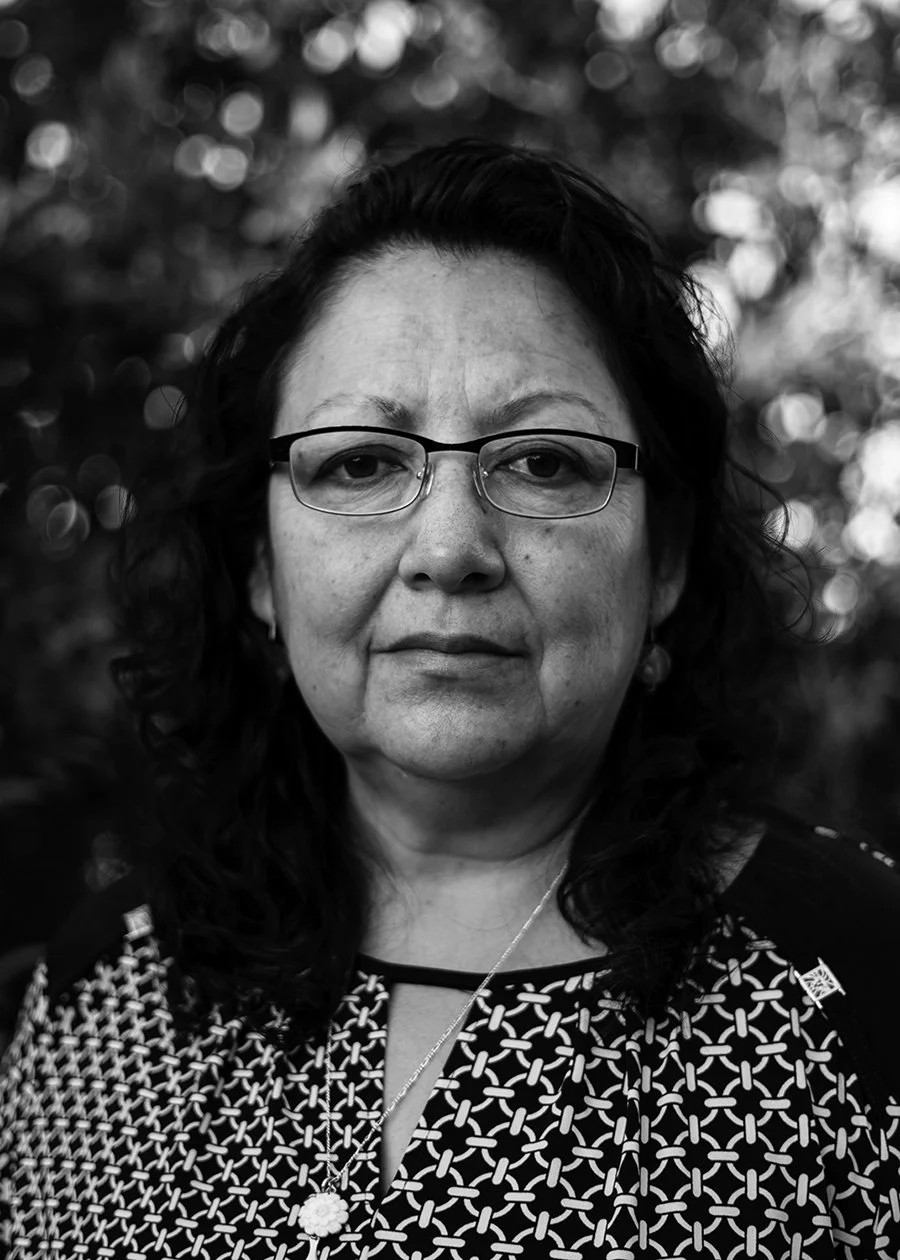
ARIZONA ARTIST NOMINEE
Elizabeth Z. Pineda
Originally from Mexico City, Elizabeth Pineda raised her family in Phoenix and Surprise, Arizona. Pineda has been a photographer throughout her life, but she received her degrees after raising her children. Her artwork explores the increasingly complicated issues of immigration, identity, and displacement, and she sees herself as speaking visually about her community and their shared experiences. To do this she uses historic and nontraditional photographic processes, printmaking, bookmaking, and papermaking. Three recent works from the Sin Nombre en Esta Tierra Sagrada (No Name in this Sacred Land) series include a lose leaf book, hand typed on handmade corn-husk paper, in a clam shell box; a set of painstakingly printed, monumental silk scrolls; and a video performance in our Arizona landscape. All three honor and recognize the 4,400+ migrants who have lost their lives in the Arizona desert. Her text is the names of the deceased from Pima County Office of the Medical Examiner and Humane Borders’ Migrant Death Mapping document. If no name is available on the document, Pineda types or says “sin nombre”; its frequency is distressing. The labor-intensive nature of the objects is important to her--and our--emotional engagement. Pineda is the recipient of a 2024 Arizona Artist Award from the Phoenix Art Museum and her work is currently on display in the accompanying exhibition.
Website: ElizabethZPineda.com
Elizabeth Z. Pineda speaks at WOMEN TO WATCH 2027 MEET THE ARTISTS EVENT January 21, 2026 | Phoenix Art Museum

Wall filled with numerous sheets of paper arranged in rows, with a small reading station to the right.
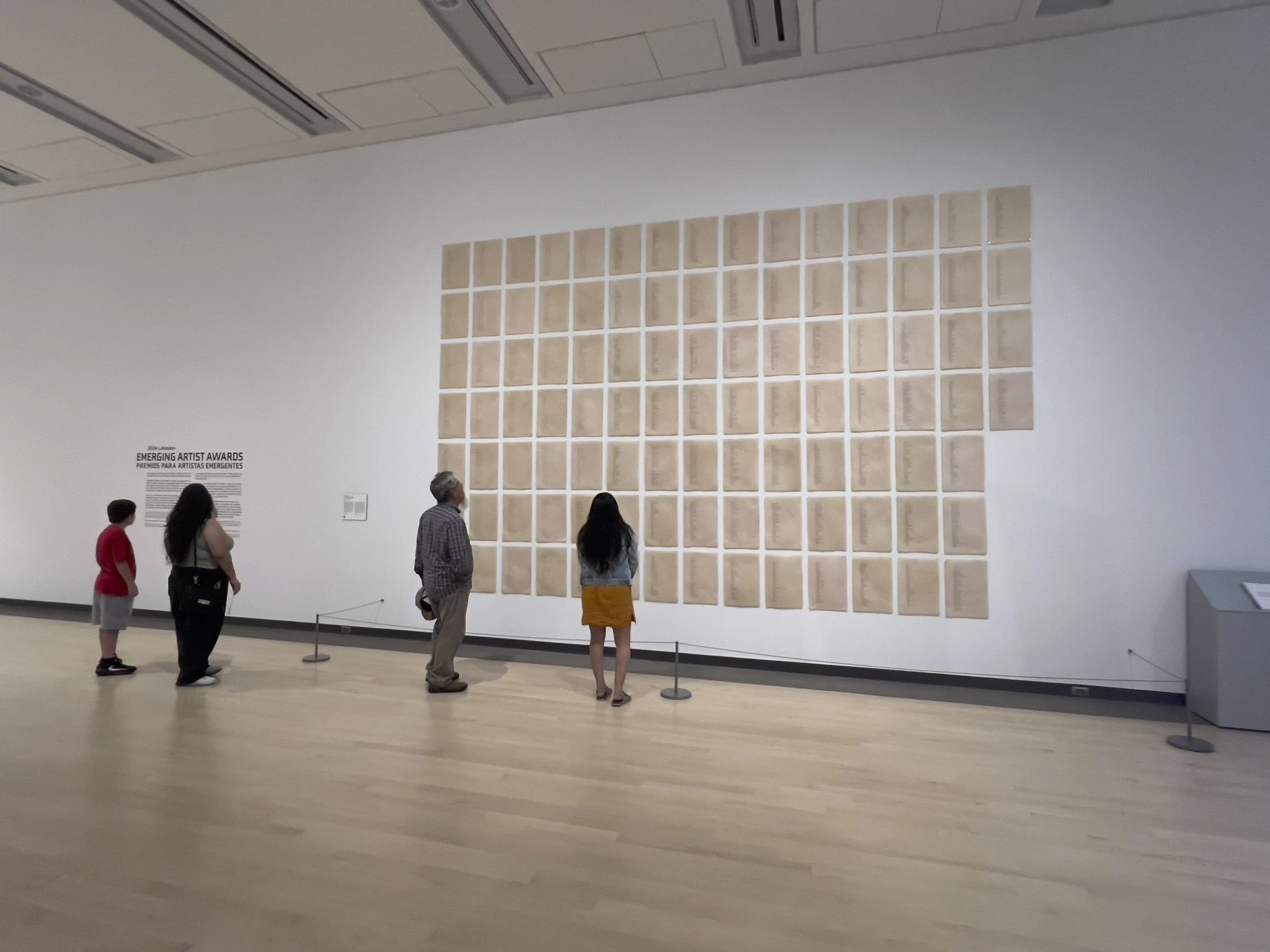
People viewing a large wall of framed sketches or photographs at an art museum exhibit titled 'Emerging Artist Awards' with a small informational plaque.

A desk with a large sheet of paper with printed text, a tablet, and a stack of books and photographs.
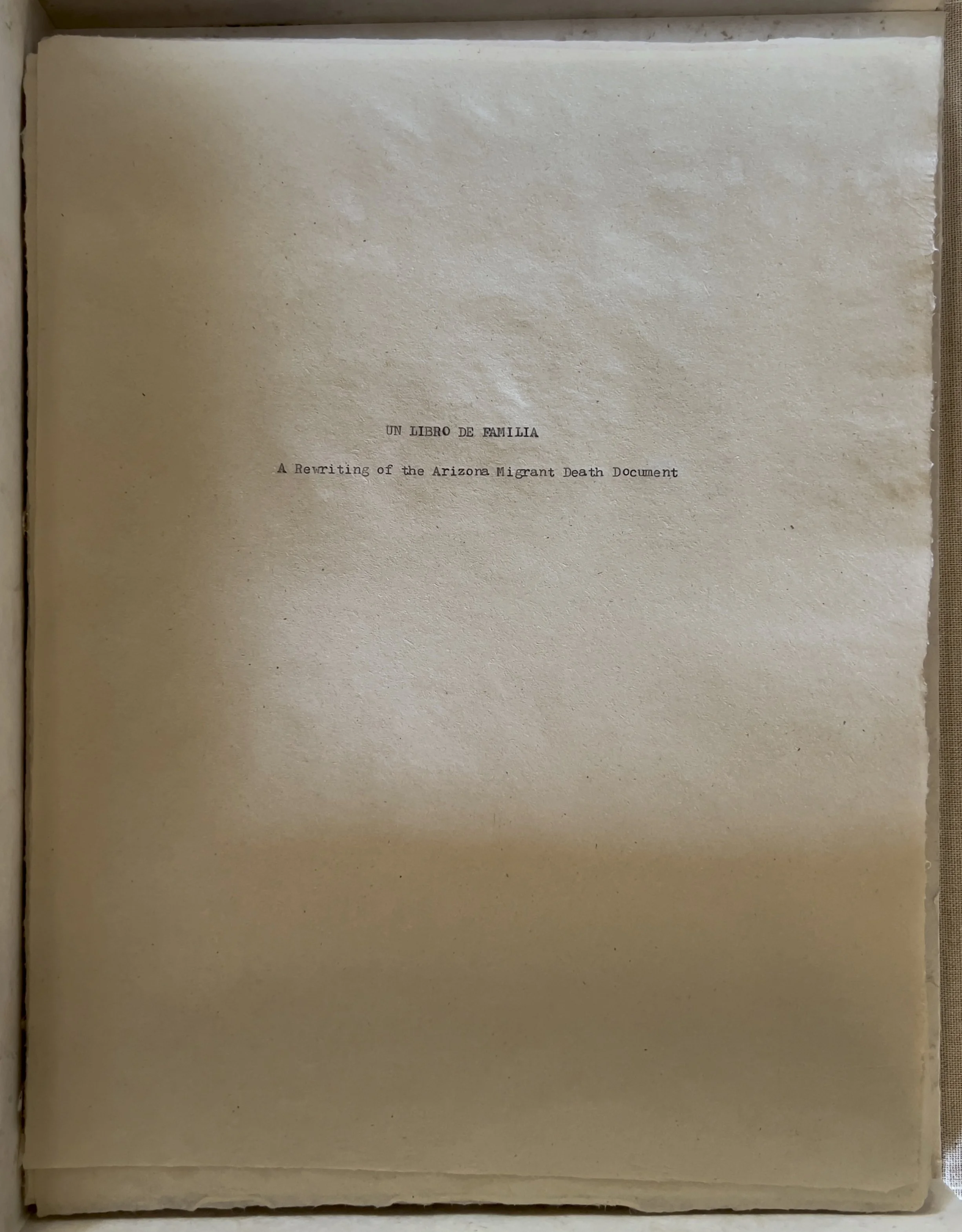
Typed cover page titled 'Un Libro de Familia' with subtitle 'A rewriting of the Arizona Migrant Death Document'.

Art installation of hanging white fabric panels suspended from the ceiling with fabric gathered at the base, creating a floating, layered effect in a dark gallery space.
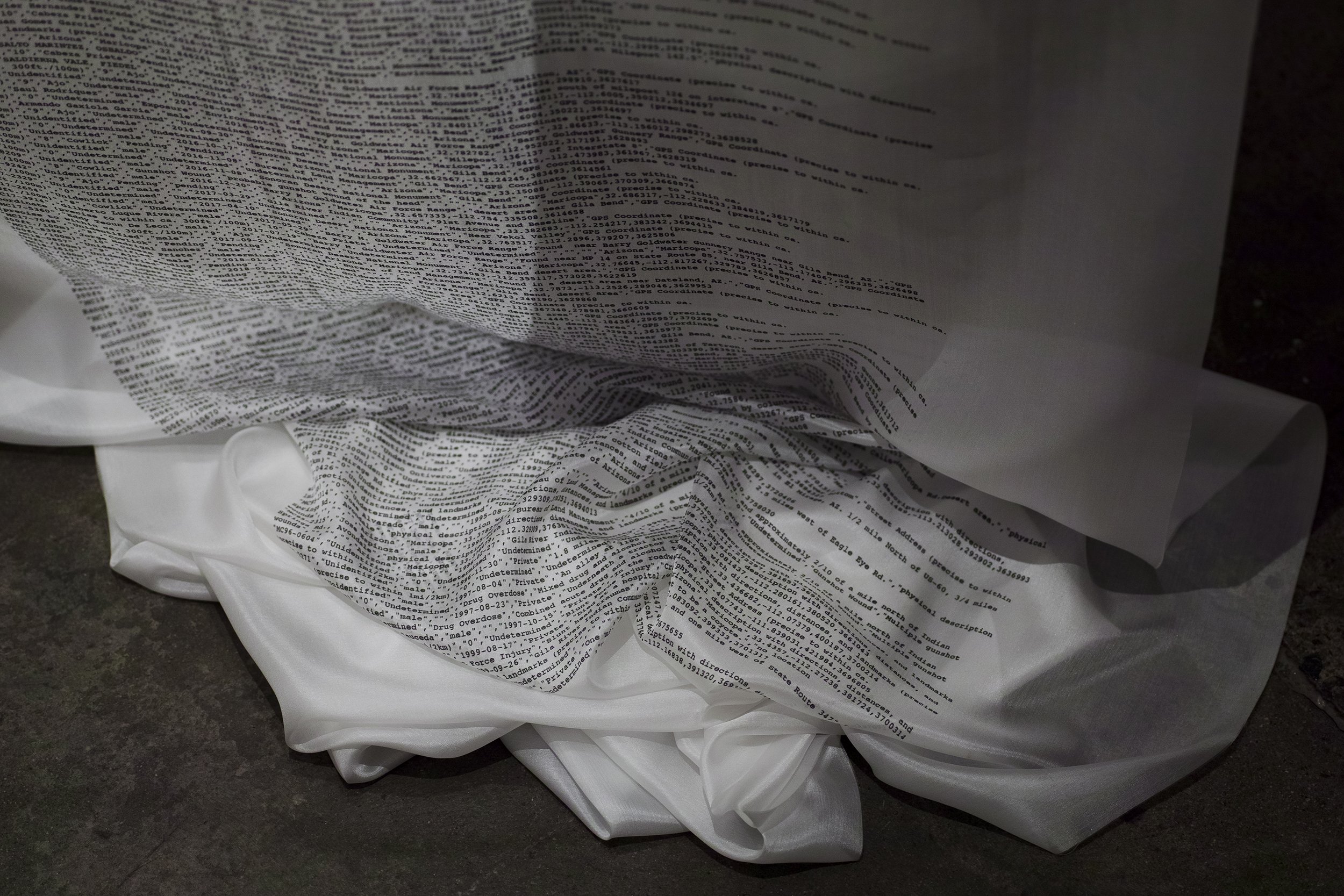
Close-up of a deflated white plastic bag with black printed text, lying on a dark surface.

Multiple white translucent fabric panels with printed text hanging vertically in an art installation on a wooden floor.

A transparent display with an outline of a person's face made from small printed characters, surrounded by a bright, open room with windows and furniture.
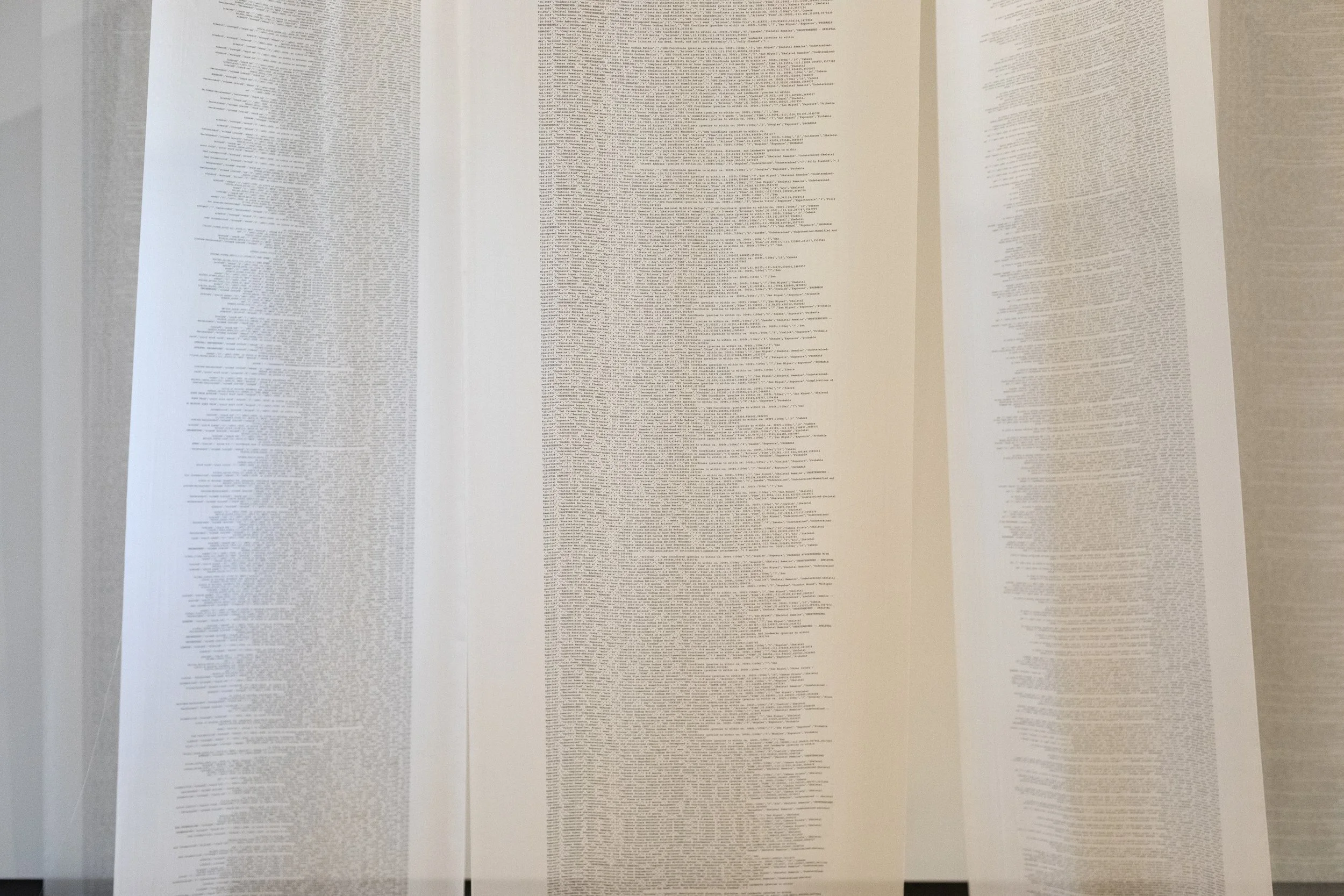
Multiple long, narrow sheets of paper with small printed text arranged vertically, hanging side by side.

Two women with shoulder-length hair, one with dark brown and the other with blonde hair, stand in front of large wall-mounted text at a museum or gallery. The woman on the left wears a long, ruffled cream-colored dress. The woman on the right wears a wide-brimmed straw hat, a blue shawl, and a black skirt, and holds a tote bag with a black and white drawing.

A woman in a blue dress standing behind a makeshift wooden desk in a desert landscape with cacti and sparse vegetation, under a clear blue sky.
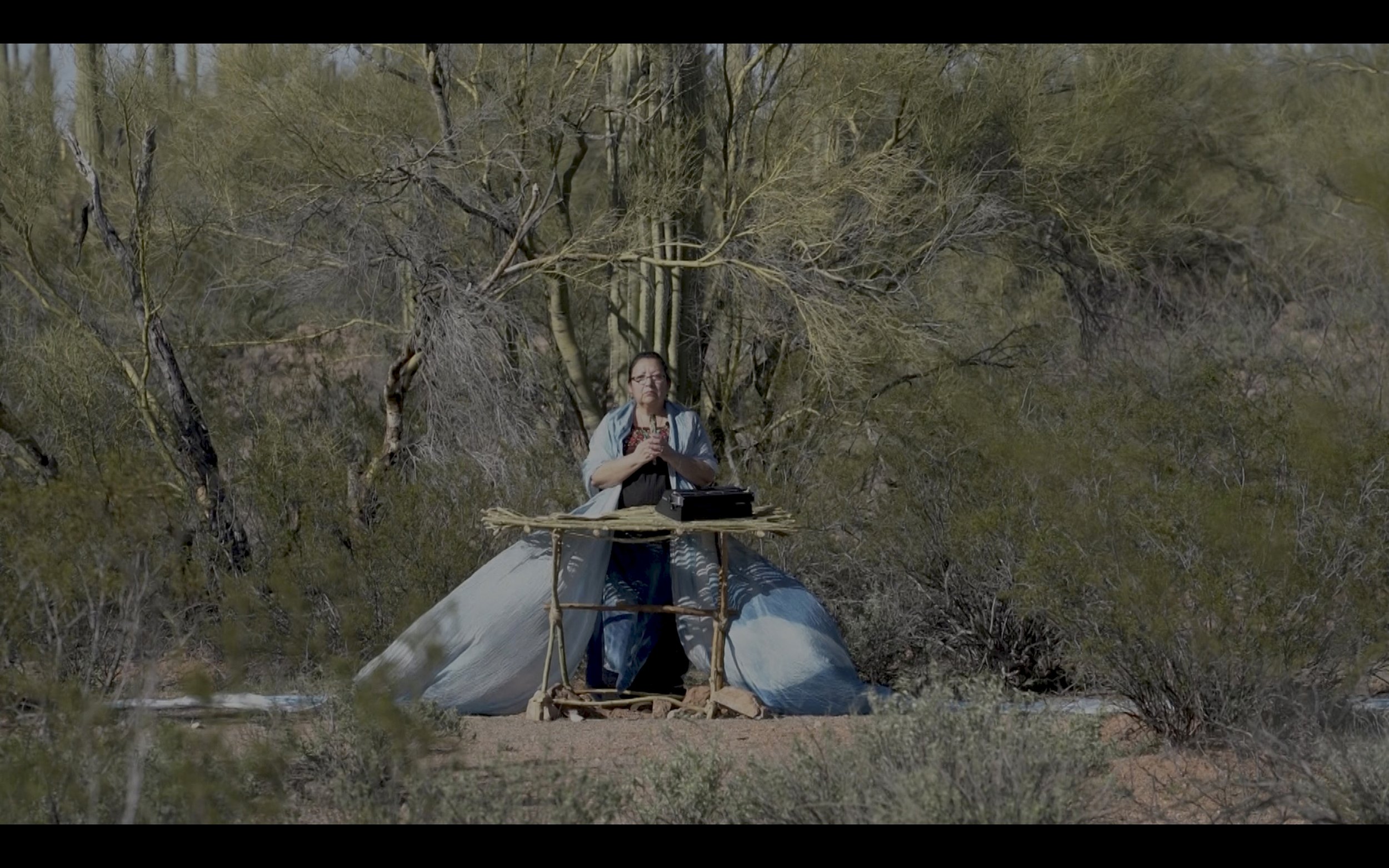
A woman standing on a small platform in desert surroundings with sparse shrubbery, a plastic tent, and a background of trees, holding a phone in her hands.

Art installation in a gallery with a projection of a desert landscape on a white wall, a small woven table, a potted plant on the left, and black seating on the right.
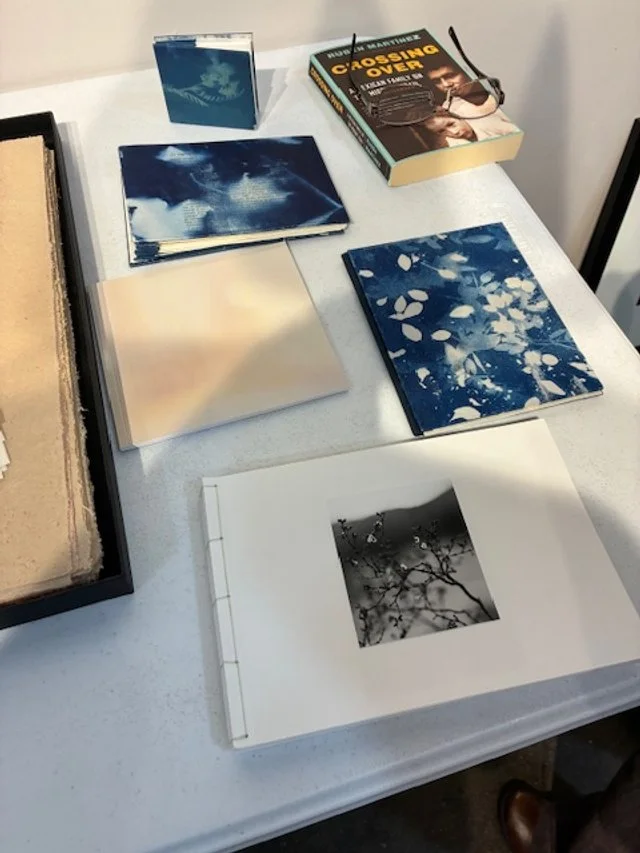
A white table displaying several hardcover books with abstract blue and white cover designs, a paperback book titled 'Crossing Over' by Victor F. Dain, and a white book with a black and white photograph of a tree on the cover.